



AI call routing uses artificial intelligence to direct incoming calls based on a caller’s intent, past interactions, and preferences. This system improves customer service by reducing wait times, offering tailored support, and connecting callers with the most suitable agent. Businesses benefit from improved efficiency, reduced costs, and enhanced resource management.
Key Takeaways:
- Faster Resolutions: Matches callers to the right agent instantly, cutting wait times and minimizing transfers.
- Personalized Service: Uses customer history and preferences for tailored experiences.
- Operational Efficiency: Balances workloads, reduces agent burnout, and lowers costs.
How It Works:
- Data Analysis: Collects caller info (e.g., history, preferences) through systems like IVR.
- AI Tools: Uses Natural Language Processing (NLP) and Large Language Models (LLMs) to interpret caller needs.
- Routing: Directs calls to the best agent or department in real-time.
Applications Across Industries:
- Healthcare: Prioritizes urgent calls and schedules appointments.
- Finance: Routes fraud inquiries to specialists while automating basic tasks.
- E-commerce: Manages customer queries during peak seasons effectively.
- Real Estate: Matches leads to agents based on expertise.
Challenges & Tips for Success:
- Challenges: Data quality issues, handling complex inquiries, and staff resistance.
- Best Practices:
Start with simple call types and expand gradually.
- Maintain human oversight for nuanced cases.
- Train staff to use AI insights effectively.
- Monitor performance and refine the system regularly.
AI call routing is transforming customer service by combining speed, precision, and personalized support, helping businesses better manage resources and improve customer satisfaction.
Key Benefits of AI Call Routing for Businesses
AI call routing is changing the way businesses handle customer interactions and manage their resources. Companies adopting these systems often notice immediate improvements in efficiency, customer satisfaction, and overall operations.
Shorter Wait Times and Faster Solutions
One of the standout advantages is cutting down wait times. AI call routing analyzes caller information - like phone number, past interactions, issue type, and agent expertise - to connect customers directly to the right agent. This eliminates the frustration of being transferred multiple times or waiting in the wrong queue. The system's ability to process this data instantly ensures that agents are equipped with relevant customer details before the call even begins. This not only speeds up problem resolution but also creates a smoother, more effective customer experience.
Personalized Customer Experiences
AI call routing takes personalization to the next level. By tapping into a customer’s interaction history, it ensures callers are matched with the most suitable specialist. For example, billing questions go to account managers, while technical issues are directed to agents familiar with the customer's specific needs. The system also adapts to customer preferences, whether they prefer detailed explanations or concise answers. Even language preferences and cultural nuances are considered, making every interaction feel tailored and comfortable.
Improved Efficiency and Cost Savings
The benefits extend beyond customer service - AI call routing enhances operational efficiency, too. By balancing workloads and routing calls based on expertise and availability, businesses can handle more inquiries without overburdening their staff. This even distribution helps reduce agent burnout and boosts job satisfaction. It also cuts down on training costs by consistently directing specific call types to the right experts, allowing agents to specialize and excel in their roles. Additionally, fewer repeat calls and smarter resource allocation lead to noticeable cost savings, making AI call routing a win-win for businesses and their customers.
How AI Call Routing Works
AI call routing is changing the game in customer service by using a mix of data and advanced technology to connect callers with the right support team. It pulls together multiple data sources and applies cutting-edge AI tools to make sure every call ends up in the right place.
Data Sources Used by AI
AI call routing systems rely on a variety of data to make smart decisions. It starts with caller identification - using phone numbers, account details, or even voice recognition to pinpoint returning customers. Then, the system taps into customer history, looking at past interactions, purchase records, and previous support cases to get a better understanding of the caller’s relationship with the company. On top of that, an AI-powered Interactive Voice Response (IVR) system gathers real-time information, recording the caller’s reason for reaching out. These combined data points set the stage for the advanced AI technologies that drive the process.
Core Technologies Behind AI Call Routing
Once the data is collected, advanced technologies step in to interpret and act on it. Natural Language Processing (NLP) is key here - it helps the system understand what customers are saying by analyzing spoken words and picking out important phrases. For example, it can tell the difference between someone saying, "I can't log into my account", and someone saying, "I want to cancel my subscription." Large Language Models (LLMs) work alongside NLP, providing a deeper understanding of more complex or nuanced customer input, ensuring the system doesn’t miss important details.
Complete Call Routing Process
The AI call routing process kicks off as soon as a call comes in. First, the system identifies the caller using ID data and customer history. Then, it records the purpose of the call through the AI-powered IVR. Using NLP and LLMs, the system analyzes the input to figure out what the caller needs. Finally, it routes the call to the right agent or department, making sure the connection is both quick and accurate.
Practical Applications and Implementation Strategies
AI call routing is changing the game for businesses when it comes to managing customer calls. By understanding where this technology shines and how to put it into action, companies can make the most of their investment and improve customer experiences.
Use Cases of AI Call Routing
AI call routing finds its way into a variety of industries, each benefiting in unique ways:
- Healthcare organizations: Handling appointment scheduling, prescription refills, and urgent care calls becomes far more efficient with AI. For example, the system can separate routine appointment requests from urgent medical concerns. This ensures critical calls are sent directly to medical staff, while administrative teams handle non-urgent matters. The result? Faster responses for emergencies and more time for healthcare professionals to focus on patients.
- Financial services: Banks and financial institutions use AI call routing to streamline customer interactions. The system can route fraud-related calls to specialists immediately, while simpler tasks like balance inquiries are directed to automated systems or general support teams. This targeted approach ensures customers get the right help without delay.
- E-commerce businesses: With AI call routing, online retailers can efficiently manage pre- and post-purchase customer needs. Questions about product details go to sales teams, while issues like returns or shipping problems are sent to customer service. During busy shopping seasons, this prevents bottlenecks and keeps customers happy.
- Real estate agencies: AI call routing helps real estate agents qualify leads more effectively. For instance, the system can identify whether a caller is a first-time homebuyer needing detailed guidance or an experienced investor with specific requirements. Calls are then routed to agents with the right expertise, saving time and improving service.
How Voxtell AI Facilitates AI Call Routing
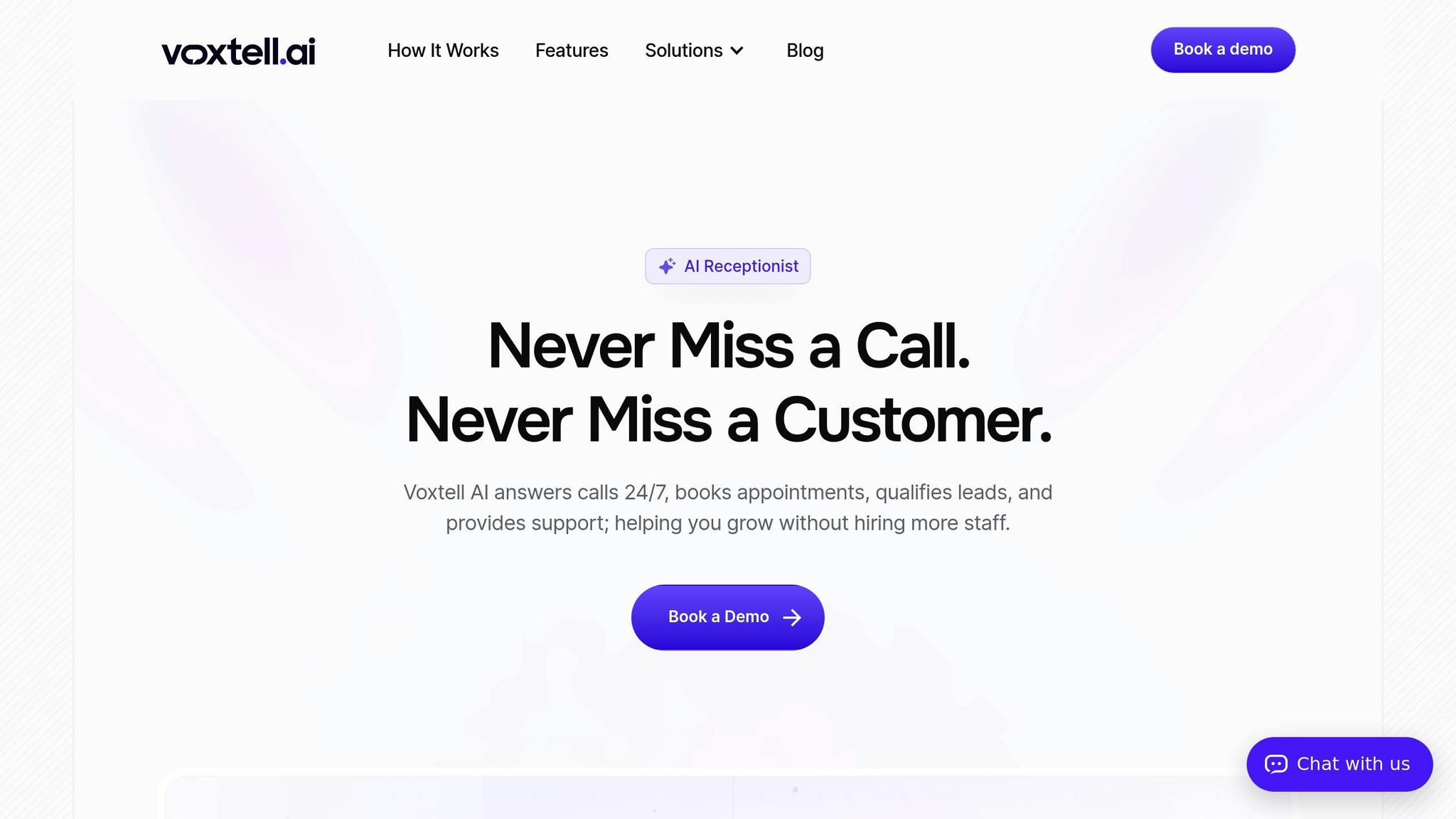
Voxtell AI takes these industry applications a step further, offering tools that make AI call routing seamless and effective. Here’s how it works:
- 24/7 AI call answering: Voxtell AI ensures no call goes unanswered, capturing every customer interaction no matter the time of day.
- Lead qualification: The platform evaluates caller intent and urgency during the first interaction. High-priority calls are sent to senior staff, while routine inquiries are handled appropriately, keeping key personnel focused on what matters most.
- Automated follow-ups: For customers who aren’t ready to act immediately, Voxtell AI schedules follow-ups to maintain engagement without requiring manual effort from employees.
- Appointment scheduling: Customers can book meetings or consultations during their call. The system checks availability and confirms details in real-time, integrating directly with existing calendars.
- Call transcripts and recordings: These features provide insights into customer interactions, helping businesses identify common issues, improve training, and maintain consistent communication quality.
Steps for Implementing AI Call Routing
To successfully roll out AI call routing, businesses can follow these steps:
- Analyze call patterns: Study peak call times, common inquiries, and call types to decide which scenarios benefit most from AI routing and which still need human attention.
- Integrate with CRM systems: Connecting the AI with your CRM allows it to access and update customer data. This ensures calls are routed based on customer history, preferences, and account details, giving agents the full context they need.
- Ensure data privacy compliance: For industries like healthcare and finance, staying compliant with regulations like HIPAA or financial privacy laws is critical. The system must be set up to handle sensitive information securely and maintain proper audit trails.
- Train your team: Employees need to understand the new workflows and how to use the AI-generated call details effectively. Managers should also be equipped to monitor and optimize performance.
- Test and optimize: Start small by routing specific call types through the AI system. Monitor key metrics like call resolution times and customer satisfaction to identify any issues before scaling up.
- Monitor performance regularly: Keep an eye on metrics such as wait times, first-call resolution rates, and customer satisfaction scores. Regular reviews help fine-tune the system, ensuring it continues to meet business goals and enhance customer engagement.
Challenges and Best Practices in AI Call Routing
AI call routing can bring incredible efficiency to customer service operations, but implementing it effectively comes with its own set of challenges. Tackling these head-on and using proven strategies can mean the difference between a smooth rollout and frustrating setbacks.
Common Challenges in AI Call Routing
One of the biggest obstacles is data quality and integration issues. Many businesses struggle with customer data that's scattered across different systems or riddled with inconsistencies. If the AI system can't access accurate and complete data - like caller history or preferences - it risks making poor routing decisions, which can frustrate customers and waste agents' time.
Another challenge lies in handling complex customer inquiries. Some problems are too nuanced or don’t fit neatly into predefined categories, which can confuse AI systems. This often results in misrouted calls, extra transfers, and longer resolution times.
Resistance from staff can also slow adoption. Employees may worry about job security or feel uneasy trusting AI-generated routing decisions. Without addressing these concerns, it’s tough to get buy-in from the team, which is critical for success.
For industries with strict regulations, privacy and compliance concerns are another hurdle. Mishandling sensitive customer data can lead to hefty fines and erode trust, making compliance a top priority.
Finally, there’s the risk of over-reliance on automation. While AI is excellent for many tasks, some situations demand human judgment and empathy - qualities AI simply can’t replicate. Relying too heavily on automation can create gaps in service quality.
Addressing these challenges is essential to unlocking the full potential of AI call routing.
Best Practices for Successful Adoption
To navigate these challenges, consider these strategies for rolling out AI call routing effectively.
Start by consolidating your data and rolling out the system gradually. Begin with simple call types, like appointment scheduling or basic inquiries, and expand to more complex scenarios only after the system has proven reliable. This step-by-step approach minimizes risks and builds trust with both staff and customers.
Always maintain human oversight for sensitive or complicated cases. Set up clear escalation paths so AI can quickly hand off calls to human agents when necessary. Train your team to spot when AI might be making a mistake and empower them to step in when needed.
Invest in thorough staff training and clear communication. Help your team understand that AI is there to assist, not replace them. Show how AI-generated insights can make their jobs easier and more effective. Regular training sessions can smooth the transition and help employees get the most out of the technology.
Monitor performance and gather feedback consistently. Keep an eye on key metrics like first-call resolution rates, customer satisfaction, and average handling times. Use this data to refine the system and improve outcomes over time.
Be upfront with customers about your use of AI. Transparency builds trust. Let them know how AI helps provide faster, more accurate service. Clear communication can alleviate concerns and enhance their overall experience.
Finally, plan for continuous improvement. AI systems get better as they process more data, but they still need regular updates to stay aligned with your business needs. Schedule frequent reviews to refine algorithms, update routing rules, and address any new challenges.
AI Call Routing Comparison Table
Here’s a quick look at how AI call routing balances speed, accuracy, and personalization, along with its limitations:
| Aspect | Advantages | Limitations |
|---|---|---|
| Speed | Instantly analyzes and routes calls; reduces delays | May struggle with complex issues needing human interpretation |
| Accuracy | Matches agents based on detailed data analysis | Can misroute calls with ambiguous or shifting customer needs |
| Cost-effectiveness | Reduces staffing needs for call distribution; boosts productivity | Requires upfront investment and ongoing maintenance |
| Scalability | Handles large call volumes without extra staff | Performance depends on data quality and system resources |
| Personalization | Uses customer history for tailored experiences | Limited by the quality and integration of available data |
| Availability | Operates 24/7 without breaks | Needs backup plans for outages or technical failures |
| Compliance | Ensures consistent adherence to protocols | Requires frequent updates to meet changing regulatory standards |
The secret to effective AI call routing lies in balancing automation with human expertise. While AI excels at processing data and making quick decisions, human agents are indispensable for handling complex problems and providing empathy. The best implementations use AI to manage routine tasks, leaving humans free to tackle situations that require creativity or emotional intelligence.
Conclusion
AI-powered call routing is changing the way businesses manage customer communication. By analyzing caller data, intent, and history in real time, these systems streamline the process, reducing wait times and connecting customers with the right agents who can resolve their issues effectively.
This smart allocation of resources allows businesses to make better use of their teams, freeing agents to focus on complex problems that require human creativity and empathy.
Looking to the future, AI call routing is setting the stage for even more advanced customer interactions. With its data-driven capabilities, businesses can move toward proactive service - anticipating customer needs before they even pick up the phone. Emerging advancements like voice biometrics for instant verification, generative AI to assist agents in real time, and autonomous systems handling entire customer journeys are on the horizon. These possibilities highlight the importance of having a clear plan when adopting AI call routing.
Starting small with straightforward use cases, ensuring human oversight for intricate scenarios, and investing in proper training are key steps for businesses. As this technology evolves, the advantages of quicker service, better customer experiences, and streamlined operations make AI call routing a critical part of modern customer service.
Adopting AI call routing today doesn’t just solve current challenges - it lays the foundation for the smarter, more personalized customer engagement systems of tomorrow.
FAQs
How does AI-powered call routing improve customer satisfaction compared to traditional methods?
AI-powered call routing transforms the way businesses handle customer calls by connecting callers with the right agents or departments more effectively. This approach cuts down on wait times, improves call accuracy, and delivers a more personalized experience based on the caller's intent, past interactions, and preferences.
Unlike older systems, AI leverages advanced algorithms to process both real-time and historical data. This allows for quicker, smarter routing that not only enhances the customer experience but also streamlines operations for businesses, making processes smoother and more efficient.
What challenges do businesses face when implementing AI call routing, and how can they address them?
Implementing AI call routing isn't without its challenges. Businesses often face high upfront costs, the complexity of system integration, and the necessity of training staff to use these technologies effectively. On top of this, ensuring data privacy and security while maintaining high-quality datasets for AI training adds another layer of difficulty. AI systems may also struggle to interpret complex conversations or grasp subtle customer needs.
To tackle these challenges, businesses can start with a gradual rollout, focusing on less critical operations first. Ensuring that AI solutions work seamlessly with existing systems is crucial. Prioritizing strong data protection practices and maintaining human oversight can address privacy concerns and boost system accuracy. A collaborative approach, where AI tools support human agents, can also help navigate more intricate customer interactions.
How can AI-powered call routing be customized for industries like healthcare or finance?
AI-powered call routing can be fine-tuned to meet the specific demands of different industries by directing calls based on factors like agent expertise, caller preferences, or industry-specific needs. Take healthcare as an example - calls can be sent to agents with medical knowledge, enabling them to address patient concerns more effectively. Similarly, in the finance sector, calls can be routed to agents well-versed in financial services, ensuring accurate advice while adhering to regulations.
This personalized routing system doesn't just boost customer satisfaction - it also streamlines operations by making sure every call lands with the agent best suited to handle it.